
Veteran's Administration (VA) Disability Criteria As many readers aldready know, the VA pays benefits on the basis of individual impairments on a percentage basis. Then the VA calculates each individual impairment rating into an overall disability percentage rating. Benefit amounts are paid on the basis of this overall rating. I have heard it said that the calculation of the individual ratings into the overall rating is "VA math." Social Security Disability Criteria Social Security benefits are paid to you as an adult if you cannot perform full-time work. "Full-time work" is a bit complicated under Social Security law, and a longer discussion is discussed here - Overview - SSI/SSDI Disability Benefits. It is an all-or-nothing full-time work determination; there are no percentages of any medical impairment. Getting Both VA and Social Security Disability Benefits Social Security Disabilty Insurance (SSDI) Benefits SSDI benefits are paid to you if you have Social Security work credits awarded to…Read More

General Rule And Exceptions Overview. Unemployment benefits may affect your Social Security disability and SSI benefits by way of an offset, amended disability onset date, and reduced back pay because you cannot receive or collect unemployment benefits and Social Security disability benefits at the same time (retirement benefits are different). However, there are two exceptions to this rule. General Rule. When you receive state unemployment benefits, you tell the state in which you live that you are not disabled and able to work. You search for jobs. You report your job searches to the state. If you allege disability to Social Security during the same time period you received state unemployment benefits, Social Security will determine you are not disabled during that same time period because you told the state in which you live you were not disabled, and you looked for work. Exception One. The first exception to the general rule is that you…Read More

Bases for Cessation of Benefits After you are awarded Social Security disability benefits, Social Security will monitor your case. You may continue to receive your disability benefits with no issues for years, perhaps until full retirement or the rest of your life. You may have your benefits terminated. There are six main reasons Social Security will terminate your benefits and issue a cessation notice: You engage in SGA/earn too much income; You receive SSI disability benefits and acquire too much in assets; You are confined in a public institution for more than 30 days; You do not cooperate with Social Security; Fraud; or Social Security determines you are no longer medically disabled. You Receive SSI and Aquire Assets Social Security will terminate benefits if you are receiving SSI disability benefits, and you aquire more than $2,000 in assets. SSI is a needs based program. You cannot make more than about $1000 per month or have…Read More
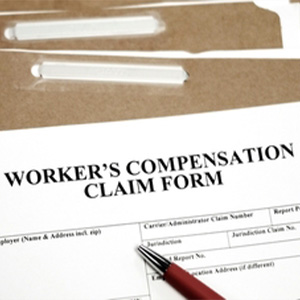
One Benefit Is Reduced - An Offset General Can I receive Social Security disability benefits and workers's compensation benefits at the same time? Yes, however for most worker's, there is a maximum amount of combined Social Security disability benefits and workers's compensation benefits that they can receive under federal law. Hence, one amount will be offset (reduced). Which amount is offset depends on whether you live in an 1) offset state, or a 2) reverse offset state. Maximum Combined Benefit Amount The maximum amount of combined Social Security disability and workers's compensation benefits you can receive is the higher of two amounts: 1) 80% of your pre-injury income called your "average current earnings" (ACE) amount, or 2) your total family monthly Social Security disability benefit amount. Nearly always, the higher of the two amounts is your ACE amount. Therefore, the maximum combined benefit amount of Social Security disability and workers's compensation benefits is usually your…Read More

Will Going To School Affect My Disability Case? Most likely yes. Going to school is a major factor in a Social Security disability and SSI benefits case as it shows a person's physical, mental, and social functioning. The evaluation of school attendance and performance is different for adults and children. School records will always need to be submitted. Adults - School And Social Security Disability Six Factors Social Security Will Consider General. If you are an adult, and you attend school while your Social Security Disability Insurance (SSDI) or Supplemental Security Income (SSI) disability case is pending, Social Security will evaluate six factors about your schooling in determining whether you are disabled: School type, Course load/school hours, Attendance, Homework, Grades/program completion/graduation, and Accommodations (this is most important). School Type. There are three school types - vocational which is mainly physical in nature, brick-and-mortar which is mainly academic, and on-line which is mainly academic and usually…Read More

Winning Your Wrist Case Social Security disability and SSI benefits for a wrist impairment will be paid to you or your child if Social Security's Non-Medical Criteria and Disability Criteria are satisfied. Satisfying the disability criteria necessitates that - You are familiar with the basic aspects of your wrist impairment (discussed on this page), You suffer disabling Functional Limitations (discussed on the next page), and You Submit Winning Evidence in your case (discussed on the next, next page). Overview There are a variety of wrist conditions that can serve as a basis for your Social Security disability and SSI benefits case that include but are not limited to the following: Breaks/Fractures, Burns, Carpal Tunnel Syndrome, Complex Regional Pain Syndrome/RSD, Deformities, Gout, Neuropathy, Osteoarthritis/Degenerative Joint Disease (DJD), Psoriatic Arthritis, Rheumatoid Arthritis, and Skin Conditions. Whatever your wrist impairment, you will need to submit to Social Security evidence of your diagnosis which is usually done with an…Read More
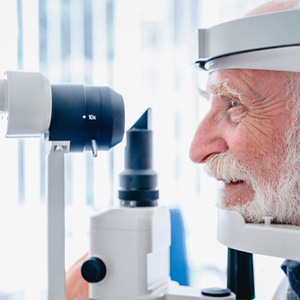
Winning Your Vision Loss Or Blindness Case You or your child can win a vision loss Social Security disability case if you satisfy two requirements. First, you satisfy the Non-Medical Criteria. Second, you satisfy the Disability Criteria. Satisfying the disability criteria means - You understand how Social Security assesses vision loss (discussed on this page) You satisfy a vision loss or blindness Social Security Listing (also discussed on this page) or you have disabling Functional Limitations, and You Submit Winning Evidence. Vision Loss And Blindness Medical Records And What Social Security Wants Social Security will evaluate your disability and SSI application about vision loss and blindness with care to determine if you meet its disability rules. Vision loss or blindness can be caused by a variety of factors. The most common types of visual disorders, conditions, and impairments reviewed by Social Security are as follows - Refractive errors including myopia (nearsightedness), hyperopia (farsightedness), presbyopia (inability…Read More
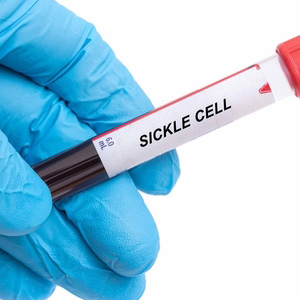
Winning Your Sickle Cell Disease Case You or your child can win your Social Security disability and SSI benefits sickle cell disease case by adhering to Social Security's - Non-Medical Criteria, and Disability Criteria. With the disability criteria, it is necessary - You understand how Social Security evaluates sickle cell disease (covered here), You satisfy the Social Security Sickle Cell Disease Listing (also covered here) or you have disabling Functional Limitations, and You Submit Winning Evidence. Social Security's Medical Evidence Review Social Security handles a limited number of sickle cell disease disability cases. Sickle cell disease is a severe blood disorder where red blood cells become deformed into a sickle shape and block blood flow in the body. The disease is also called sickle cell anemia because anemia is a medical condition when your blood cells cannot carry sufficient oxygen to your body's organs and tissues. Blood carries oxygen. Sickle cell disease is an inherited…Read More

Winning Your Shoulder Case With a shoulder condition, success is had in a Social Security disability and SSI benefits case if you satisfy two criteria: 1) Non-Medical Criteria and 2) Disability Criteria. In terms of the disability criteria, it is important you understand how Social Security evaluates shoulder conditions (covered on this page) and you Submit Winning Evidence. Social Security's Reading Of Your Disabling Shoulder Medical Evidence Is Critical A shoulder impairment is a common basis for Social Security and SSI disability benefits, and it may be caused by any number of traumatic events or medical impairments. No matter the bases of your shoulder impairment, you must give Social Security both medical evidence and non-medical evidence to prove you are disabled. The first step is to provide Social Security your shoulder diagnosis. It is critical your diagnosis is supported by objective testing such as an MRI, CT, or x-ray. If you do not have this…Read More

Winning Your Case You or your child will win a scleroderma Social Security disability or SSI benefits case when you satisfy Non-Medical Criteria and Disability Criteria. In terms of the disability criteria, you need to understand how Social Security evaluates scleroderma (covered on this page), and you need to Submit Winning Evidence. Scleroderma, Your Medical Evidence, And How Social Security Sees It Scleroderma (sclerosis) is an autoimmune skin disease (the body attacks its own tissues) The body produces excessive collagen causing thickening and hardening of the skin, connective tissue (e.g. ligaments, tendons, and cartilage), bone, and sometimes internal organs. Social Security grasps that common scleroderma symptoms include - Calcium deposits (bumps) on the joints, Tissue swelling, Pain, Numbness, and Reduced range of motion. Winning a disability claim starts with your scleroderma diagnosis. However, this is a challenge for scleroderma suffers because there is no specific test to diagnose scleroderma. It is diagnosed with a combination…Read More