
Benefits For Your Family Depend On What Type Of Disability Benefits You Receive Supplemental Security Income (SSI) If you receive SSI disability benefits only, you are not entitled to additional benefits for your family members. Social Security Disability Insurance (SSDI) If you receive SSDI disability benefits, certain family members can also be paid Social Security benefits: Child/children (subject to a "family maximum" discussed below), Spouse (subject to a "family maximum" discussed below), Divorced Spouse, Mother and father benefits as a surviving spouse, Mother and father benefits as a surviving spouse, and Widow/widower. Your dependent family members are entitled to monthly payments and back pay. They are not entitled to Medicare or Medicaid (medical insurance). All benefits paid to family memebers do not reduce your SSDI month benefit or backpay amount. Children's Benefits Eligibility Criteria Your child can receive monthly SSDI benefits if you are eligible for monthly SSDI benefits and your child satisfies the following:…Read More

Three Types of Social Security Benefits for Children There are three types of Social Security benefits available for a child or an "adult child": Dependent child benefits - SSDI, Survivor's benefits - SSDI, Diabled "Adult Child" benefits - SSDI, and Disabled minor child benefits - SSI. Type 1 - Dependent Child Benefits - SSDI You (a parent) are eligible for dependent child benefits if 1) you are disabled for SSDI and 2) your child is your dependent. You are will be determined disabled for SSDI if you satisfy the 1) Adult SSDI Non-Medical Criteria, and 2) Adult SSDI Disability Criteria. Your child will be determined to be your dependent if they satisfy the SSDI Dependent Child Criteria. In this situation, you must be disabled; your child does not. Type 2 - Survivor's Benefits - SSDI A child does not have to be disabled to receive survivor's benefits. A child must only satisfy non-medical criteria as…Read More

How Does Early Social Security Retirement Benefits Affect SSDI or SSI Disability Benefits? Early Retirement & Lower SSI For any month you qualify for both SSI disability benefits and early retirement benefits, and your early retirement benefits are higher than your SSI disability benefits, you will only receive your early retirement amount. Early Retirement & Higher SSI For any month you qualify for both SSI disability benefits and early retirment benefits, and you early retirement benefits are lower than your SSI disability benefits, you will receive both benefits, but your SSI disability benefits will be offset by your early retirement benefits. Example - You were born in 1956, and your full retirement age is 66 and 4 months. You applied for SSI disability benefits on your 61st birthday. You began receiving early retirement as of your 62nd birthday. Your early retirement monthly benefit amount was reduced by 26.67%. Your full retirement monthly benefit amount is $1200.…Read More

Overview General. There are three important points to make before we get started: You can receive Social Security Disability Insurance (SSDI) benefits or Supplemental Security Income (SSI) disability benefits if you satisfy Social Security's Non-Medical Criteria and Social Security's disability criteria; The disability criteria is organized into a 5-Step Disability Evaluation Process; and The 5-Step Disability Evaluation Process is the same for both SSDI and SSI disability benefits. What "Adult" Means. Social Security's adult disability criteria apply to the following persons: SSI applicants who are over 18, and SSDI applicants of any age who have enough work credits to apply on the basis of their own work record (this is nearly always a person over 18 as nearly all persons under 18 have not earned enough work credits to apply on the basis of their own work record). The Five-Step Disability Evaluation Process General. Social Security will find you disabled if you satisfy the 5-Step…Read More

Overview - Getting A Faster Social Security Decision Social Security will fast-track two types of disability cases to make a quicker decision: an 1) expedited case, or a 2) critical case. At the initial and reconsideration levels, Social Security refers to fast-tracked cases as expedited cases, and there are five types: Compassionate allowance (CAL), TERI - terminal illness, Military casualty/wounded warrior (MC/WW), Quick disability determination (QDD), and Presumptive disability/presumptive blindness. At the hearing level, Social Security refers to fast-tracked cases as critical cases, and there are six types (the first three overlap with expedited cases): Compassionate Allowance (CAL); TERI - Terminal Illness; Military Casualty/Wounded Warrior (MC/WW); Veteran a with 100% permanent and total disability rating; Dire need case; and Claimant who is suicidal, homicidal, or violent. Social Security will determine whether your case satisfies the criteria of either. However, Social Security will not send you an official decision on this issue. You will generally only…Read More
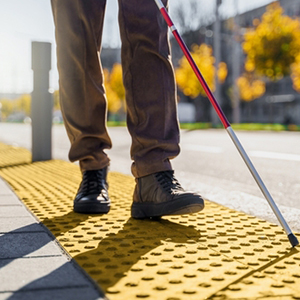
Defined There are two statutory blindness definitions. First, central visual acuity of 20/200 or less in the better eye with the use of correcting lens which is represented in Adult Listing 2.02 and Child Listing 102.02. Second, an eye that has a limitation such that the widest diameter of the visual field subtends an angle no greater than 20 degrees which is represented in Adult Listing 2.03 and Child Listing 102.03. Special Rules If you are statutorily blind, a number of special rules apply to you. The Durational Requirement (DR) - There are four special DR rules. First, if you are a statutorily blind Supplemental Security Income (SSI) claimant, there is no DR. Second, if you are 1) statutorily blind; 2) age 55 or older; and 3) a Social Security Security Disability Income (SSDI) claimant, disabled widow/er, or a child disability beneficiary; there is no DR. Third, if you are a under 55 statutorily blind…Read More
Overview Before Social Security, there are four disability benefit adjudication/decision levels. This is true whether your case is a Social Security Disability Insurance (SSDI) or Supplemental Security Income (SSI) disability case. At any level, you can receive one of four types of decisions as follows: Fully favorable (Social Security found you disabled and awarded you all the benefits to which you are entitled), Partially favorable (Social Security found you disabled but awarded you part of the benefits to which you are entitled), Unfavorable (Social Security found you not disabled), and Technical denial (Social Security denied your claim because you missed a deadline or did not meet non-disability eligibility rules). If you receive a denial or an unfavorable decision and you do not appeal, your case ends. If you receive a denial or an unfavorable decision and you do appeal, your case will be adjudicated at the next level. If you receive a partially favorable decision…Read More

By California Disability Law Office – Serving Los Angeles, CA Motor vehicle accidents can be life-altering, especially when injuries prevent you from working and supporting yourself or your family. On top of the physical pain of your accident, financial worries and concerns about employability can cause added stress. Where can you turn for caring, determined legal help? At the California Disability Law Office, we help injured victims of car accidents, truck accidents, motorcycle accidents, bicycle accidents, and pedestrian accidents throughout Los Angeles. Injured in a serious accident? We’ll help you regain control of your life and access much-needed financial support when you can no longer work. Types Of Injuries We Can Help You Get Benefits For We represent clients who have sustained a wide range of injuries due to motor vehicle accidents in California, especially in the greater Los Angeles area, including but not limited to: Leg, knee, and ankle injuries that take you off…Read More
By California Disability Law Office – Serving Los Angeles, CA Living with seizures can significantly impact your daily life and limit your ability to work, even if you don’t feel disabled. From being unable to drive on LA’s busy highways to avoiding jobs around unprotected heights or operating heavy machinery, your career options may be severely restricted. Unfortunately, many seizure-related disability claims are denied by the Social Security Administration (SSA). Why Seizures Disability Claims Are Often Denied The SSA frequently denies disability claims for seizures due to two main factors: Frequency of Seizures: If your seizures are not deemed frequent enough, your claim is likely to be denied. Failure to Follow Prescribed Treatment: The SSA requires evidence that you are following your prescribed medical treatment plan. Deviations from this plan can result in a denial. When assessing your case, the SSA will require comprehensive medical records, including documentation from your physician detailing the frequency and…Read More

Living with a medical condition that severely limits your ability to work or perform daily activities can be isolating and challenging. If you find yourself unable to earn a living due to a disability, you may be wondering whether you qualify for Social Security Disability Insurance (SSDI) benefits. Fortunately, you don’t have to navigate these complex legal questions alone. A skilled Social Security disability attorney in Los Angeles, CA, can guide you through the application process and determine your eligibility for SSDI benefits. Understanding SSDI Eligibility The Social Security Administration (SSA) maintains a list of medical conditions, known as the Blue Book, that outlines impairments that may qualify individuals for SSDI benefits. However, even if your condition is listed, you must meet specific criteria to be eligible. Likewise, if your impairment is not included in the Blue Book, you may still qualify if you can demonstrate that your condition meets SSA requirements. Consulting with an…Read More