
Winning Your Case You can win a Social Security disability case with arthritis - Osteoarthritis or Degenerative Joint/Disc Disease, Rheumatoid Arthritis, Psoriatic Arthritis, or Gout. You must satsify Social Security's - Non-Medical Criteria, and Disability Criteria. You should review the criteria if you are not already familiar with them. Once we cover how Social Security assesses arthritis medically, we will move to the next page to discuss how your arthritis causes Functional Limitations and how Social Security asseses your limitations to determine if you are disabled. Then we will move on to what Evidence you need to submit to prove your arthritis, your limitations, and other aspects of your disability case. Arthritis Issues In A Social Security Disability & SSI Case General Arthritis may be the most common medical impairment in America. It limits functioning in nearly all aspects of a person's life. Therefore, Social Security & SSI disability filings are a daily occurrence. There…Read More
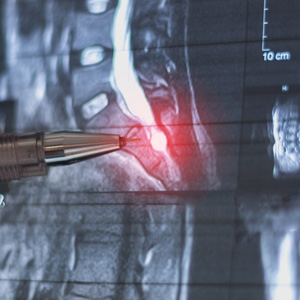
Winning Your Case Severe spinal arachnoiditis symptoms? Meet two Social Security criteria, and you will be entitled to Social Security and SSI disability benefits: Non-Medical Criteria, and Disability Criteria. You would do well to read our review of the criteria if you are unfamiliar with them. This review covers Social Security's analysis of your medical records. On the next page, we cover how Social Security analyzes your Functional Limitations caused by your spinal arachnoiditis to determine disability. Then we go on to our Evidence pages to cover what you must submit to win your disability case. Important Medical Evidence - Spinal Arachnoiditis What Is It. Back or neck arachnoiditis is caused by inflammation of the arachnoid membrane that surrounds the nerves of the spinal cord. The inflammation produces scar tissue which causes the spinal nerves to clump together. The clumping causes nerve compression. Spinal arachnoiditis usually occurs as a result of spinal surgery, trauma, or…Read More

Winning An Anxiety & Panic Disorder Case Your Social Security disability & SSI application or appeal concerning your anxiety or panic disorder will be allowed if you satisfy two Social Security criteria: 1) Non-Medical Criteria, and 2) Disability Criteria. This page covers how Social Security evaluates your anxiety and panic disorder. Our next page covers how Social Security determines and evaluates your Functional Limitations to determine whether you are disabled. Then we will move on to what Evidence that you must provide to establish your medical condition, your limitations, and the remaining issues in your Social Security disability case. Disability, Medical Evidence, And Anxiety & Panic Disorder Anxiety and Panic disorder are serious medical conditions and common Social Security and SSI disability cases. You or your child can match the disability criteria with anxiety and panic disorder. Both are very closely related psychiatric disorders with very similar symptoms. Social Security is more likely to rule…Read More
Winning Your Case If you or your child suffer ankylosing spondylitis (commonly called "A.S.") and abide by two fundamental Social Security rules, you will be awarded disability benefits. You must meet the Non-Medical Criteria. You must also meet the Disability Criteria. This page discusses Social Security's review of your ankylosing spondylitis medical evidence. On the next page, we discuss your Functional Limitations and how Social Security asseses your limitations to determine if your ankylosing spondylitis disables you. Then we will move to what Evidence is required to prove your medical condition, your limitations, and other areas of your disability case. Social Security's Take On Ankylosing Spondylitis Ankylosing spondylitis (a type of spondyloarthropathy) is a form of arthritis that primarily affects the spine (mainly the lower spine) or the sacroiliac joints (joints that connect the spine to the pelvis). Ankylosing means stiffening of a joint. Spondylitis means vertebrae. Ankylosing spondylitis causes inflammation of the joints which…Read More

Winning Your Case Do you suffer significant ankle symptomology? If so, you can obtain Social Security and SSI disability benefits. You must prove you satisfy Social Security's - Non-Medical Criteria, and Disability Criteria. After we address Social Security's assessment of your ankle medical evidence (this page), we will move to the next page to address how your ankle causes Functional Limitations and how Social Security asseses your limitations to determine if you are disabled. Then we will move on to what Evidence you need to submit to prove your medical condition, your limitations, and other parts of your disability case. Social Security's Thoughts - Ankle Medical Evidence Ankle symptoms, functional limitations, and a disabling impairment can occur for several reasons - an accident, chronic overuse, or one of several disease processes. It is important you notify Social Security of all the relevant medical care you have received as well as additional other evidence to support…Read More

Winning Your Case You can obtain Social Security disability and SSI benefits with an aneursym. You must satsify the Non-Medical Criteria and the Disability Criteria. You should review the criteria if you are not already familiar with them. Once we go over how Social Security assesses your aneursym medical evidence (this page), we will move to the next page to discuss how your aneursym causes Functional Limitations and how Social Security asseses your limitations to determine if you are disabled. Then we will move on to what Evidence you must submit to prove your medical condition, your limitations, and other aspects of your disability case. Social Security's View Of Your Aneursym Medical Evidence What Is An Aneurysm? Social Security regularly reviews aneursym disability & SSI cases. An aneurysm is a bulge in an artery caused when the inner lining of the artery separates from the outer wall of artery (dissection) causing the artery to weaken…Read More

General There are two Social Security disability programs: Social Security Disability Insurance (SSDI), and Supplemental Security Income (SSI). For both SSDI and SSI disability programs, there are three types of disability benefits: Adult disability benefits, Child disability benefits, and Statutory blindness benefits. Adult Disability Benefits Adult 5-Step Disability Evaluation Process. You can receive either or both SSDI and SSI disability benefits if you satisfy the Adult 5-Step Disability Evaluation Process. You must satisfy Steps 1, 2, and 3 or Steps 1, 2, 4, and 5 (most common): Step 1: You are not performing "substantial gainful activity" (SGA) and you satisfy the durational requirement, Step 2: Your impairment is "severe," Step 3: You satisfy a "listing," Step 4: You cannot do your "past work," and Step 5: You cannot do "other work." A full discussion is available here - Adult Disability Criteria. Child Disability Benefits Child 3-Step Disability Evaluation Process. Based on their disability, your child…Read More

Winning Your Case You can win your Social Security and SSI disability amputation benefits claim if you comply with Social Security's Non-Medical Criteria and Disability Criteria. On this page, we will discuss how Social Security views your medical evidence. Then we move to the next page to discuss how your amputation causes Functional Limitations and how Social Security asseses your limitations to determine if you are disabled. Then we move on to what Evidence is needed to establish your medical condition, your limitations, and other aspects of your disability claim. Social Security's View About An Amputation There are three primary issues in a Social Security and SSI disability case with an amputation: 1) the loss of use of the body part that was amputated, 2) pain and swelling in the area of the amputation, and 3) how well you can use a prosthetic device (if one is used). How all three affect your case depends…Read More

Four Types of Social Security Benefits for Children There are four types of Social Security benefits available for children or an "adult child": SSDI dependent's benefits, and SSDI survivor's benefits, SSDI "adult child" benefits, and SSI disability benefits. Type 1 - SSDI Dependent Benefits Dependent child benefits are discussed here - Dependent Child Benefits. Type 2 - Survivor's Benefits Benefits Available. There are three benefits available if a child is eligibile for Survivor's benefits: Monthly benefits; Back pay; and Medicare (health insurance); Monthly Benefits and Back Pay. Monthly benefits and back pay are paid to the custodian of the child - usually this is the surviving parent, but this may be another family member, foster parent, or institution. Monthly benefits are 75% of the deceased parent's primary insurance amount (this is an amount calculated by Social Security based on the deceased parent's work record). Monthly benefits and back pay benefits begin the month of the…Read More

What Kinds of Disability Benefits Can I Get? There are two different Social Security disability programs: Social Security Disability Insurance (SSDI) and Supplemental Security Income (SSI). If Social Security finds you disabled with either program, you are entitled to the following four benefits: Monthly payments, Back pay, Medicare/Medicaid (medical insurance), and Earnings freeze. Tip. If you are entitled to SSDI benefits, you may have family members entitled to Family's SSDI Disability Benefits. Monthly Amount SSDI Your SSDI monthly benefit amount is based on how much you have paid in lifetime Social Security taxes. The average SSDI monthly amount in 2025 is $1,580. THe maximum is $4,018 maximum. If you want to know your monthly benefit amount, you can call Social Security and request a written benefit estimate which Social Security will send to you. SSI The federal SSI monthly benefit amount in 2025 is $967 per individual and $1,450 per couple and $484 for an…Read More