
Winning Your Case You or your child's application or appeal for Social Security disability benefits will be awarded with depression if the following Social Security requirements are met: Non-Medical Criteria, and Disability Criteria. Satisfying the disability criteria requires - You know how Social Security views depression (evaluated on this page), You satisfy the Social Security Depression Listing (also evaluated on this page) or you have disabling Functional Limitations (evaluated on the next page), and You Submit Winning Evidence (evaluated on the last page). Social Security's Assessment of Depression Depression is one of the most common mental health conditions Social Security evaluates. The two most common types of depression are major depressive disorder which is considered a severe form of depression, and dysthymia which is considered a moderate or mild form of depression. Other types of depression include psychotic depression (depression associated with psychosis), postpartum depression (depression after the delivery of a child), bipolar depression (the…Read More
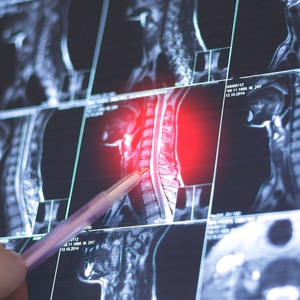
Winning Your Case How do you win a degenerative disk disease disability claim? Simple. Meet two Social Security criteria: Non-Medical Criteria, and Disability Criteria. On this page, we learn how Social Security examines your degenerative disc disease medical evidence. On the next page, we learn how Social Security examines your degenerative disc disease Functional Limitations to determine whether you are disabled. Then on the last page, we learn how to Submit Winning Evidence to prove your condition, your limitations, and additional aspects of your disability case. Social Security's Medical Evidence Review For Degenerative Disc Disease A Common Case Social Security and SSI disability cases involving lumbar or cervical degenerative disc disease are very common - the thoracic type is less common. Degenerative disk disease is degeneration of a spinal disc (the cartilage-like material that rests between your vertebrae). The degeneration often causes a herniation (the disc moves to where it shouldn't) which causes the disc…Read More
Winning Your Case For you or your child to become entitled to Social Security benefits based upon a cystic fibrosis disability, you must meet Social Security's - Non-Medical Criteria, and Disability Criteria. Meeting the disability criteria requires - You know how Social Security assesses cystic fibrosis (discussed on this page), You satisfy the Social Security Cystic Fibrosis Listing (also addressed here) or you have disabling Functional Limitations (discussed on the next page), and You Submit Winning Evidence (discussed on the next, next page). How Social Security Reads Your Cystic Fibrosis Medical File A Social Security and SSI disability cystic fibrosis case is usually awarded at the initial level and rarely requires a hearing. Cystic fibrosis is a very severe medical impairment that causes the cells in your body that produce sweat, mucus, and digestive enzymes to instead produce abnormal fluids that are thick and sticky. These abnormal fluids clog airways, ducts, and passages of a…Read More
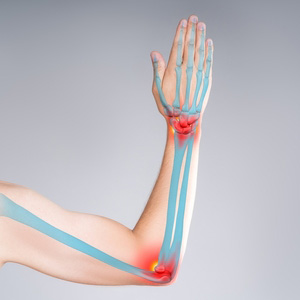
Winning Your Case You can win a cubital tunnel syndrome case if you satisfy two criteria. First, Non-Medical Criteria. Second, Disability Criteria. Satisfying the disability criteria entails that - You know how Social Security reviews your cubital tunnel syndrome case (we go over that here), You have disabling Functional Limitations (we go over that on the next page), and You Submit Winning Evidence (we go over that after we go over functional limitations). Your Cubital Tunnel Syndrome Disability And Medical Evidence Cubital tunnel syndrome is a somewhat rare Social Security & SSI disability case. It is a nerve condition that occurs when there is abnormal pressure on, or stretching of, the ulnar nerve within the cubital tunnel of the arm (elbow). You will need to submit to Social Security at least three aspects of your medical evidence. First, you need to submit your medical records to provide evidence of your diagnosis which is made by…Read More
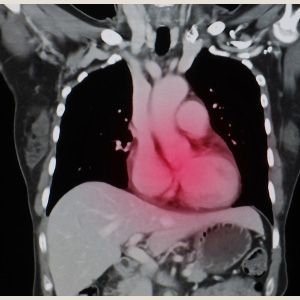
Winning Your Case Can you be awarded Social Security disability benefits with coronary artery disease? Yes. You must satisfy two Social Security criteria. First, the Non-Medical Criteria. Second, the Disability Criteria. On this page, we discuss how Social Security evaluates your coronary artery disease medical evidence. On the next page, we discuss how Social Security evaluates your Functional Limitations caused by your coronary artery disease to determine if you are disabled. Lastly, we discuss how to Submit Winning Evidence so you can be awarded disability benefits. Social Security Disability & Coronary Artery Disease - An Evaluation Overview Claimants nationwide regularly file for Social Security and SSI disability benefits with coronary artery disease (also called ischemic heart disease, atherosclerosis, or cardiovascular disease) which is either damage to or disease of the heart itself or the arteries that supply blood to it. The main coronary arteries (those mostly commonly affected) are the right main coronary artery, left…Read More

Can I Get Social Security Disability And SSI Benefits If I Have Coronavirus/Covid-19? Yes. Social Security can grant you disability and Supplemental Security Income (SSI) benefits if you have been diagnosed with Coronavirus/Covid-19. You must satisfy Social Security's Non-Medical Criteria and Disability Criteria. Satisfying the disability criteria necessitates - You know how Social Security examines your medical evidence regarding Coronavirus/Covid-19 and any other related medical condition (discussed on this page); You suffer disabling Functional Limitations (discussed on the next page); and You Submit Winning Evidence that establishes your disability (discussed on the next, next page). What Is Important Medically What Is Coronavirus/Covid-19? The medical community poorly understands Coronavirus/Covid-19. It is a virus; it is a microscopic organism that infects and lives in living cells. Coronavirus/Covid-19 spreads by human bodily fluids (liquid molecules). It is not an airborne virus. It can be spread when one person expells liquid molecules from the mouth or nose (speaking, coughing,…Read More
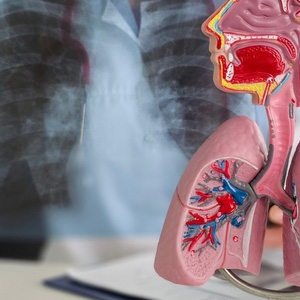
Winning Your Case All that is necessary to win a COPD or emphysema Social Security disability and SSI case is to prove two Social Security criteria: Non-Medical Criteria, and Disability Criteria. Proving the disability criteria involves - Learning how Social Security assesses COPD or emphysema (covered here) Satisfying the Social Security COPD Listing (also covered here) or you have disabling Functional Limitations (covered on the next page), and You Submit Winning Evidence (covered after functional limitations). Winning A Disability Case - COPD & Emphysema Medical Evidence Social Security sees many COPD disability and SSI cases. COPD is airway inflammation of the lungs that can cause significant symptoms, impact activities of daily living, result in a disability, and result in death. It is one of the top five causes of death in America. The two most common types of COPD are emphysema and chronic bronchitis. Emphysema is inflammation of the lungs causing damage to the air…Read More
Winning Your Case With chronic or congestive heart failure, you will win your case and receive Social Security and SSI disability benefits if you satisfy two Social Security criteria: Non-Medical Criteria, and Disability Criteria. If you need a review of this criteria, please give it one (even just a read of the overviews). On this page, we evaluate how Social Security assesses your chronic or congestive heart failure medical case. On the next page, we evaluate how Social Security assesses your Functional Limitations to determine if you are disabled. On the next, next page, we evaluate what Evidence you must provide to prove your medical condition, your limitations, and other aspects of your Social Security disability case. Congestive & Chronic Heart Failure Disability Evidence What Social Security Looks for Congestive or chronic heart failure is a serious and common Social Security disability and SSI case that occurs when your heart is unable to pump enough…Read More
Two Criteria To Obtain Benefits You must satisfy two Social Security criteria if you want SSDI and SSI disability benefits for a congenital heart defect: Non-Medical Criteria, and Disability Criteria. Satisfying the disability criteria means - You grasp how Social Security considers congenital heart defects (covered on this page), You satisfy the Social Security congenital heart defect Listing (also covered on this page) or you have disabling Functional Limitations (covered on the next page), and You Submit Winning Evidence (covered on the last page) How Your Congenital Heart Defect Disability Case is Won Social Security is very familiar with congenital heart defect disability and SSI cases. A congenital heart defect is a structural abnormality of the heart that develops before birth. The following are the most common kinds of congenital heart defects: Aortic valve stenosis (valve does not fully open), Atresia (deformed valve), Regurgitation (valve does not close completely), Coarctation of the aorta (narrowing of…Read More

Winning Your Chronic Regional Pain Syndrome & Reflex Sympathetic Dystrophy Case You can obtain Social Security and SSI disability benefits with chronic regional pain syndrome & reflex sympathetic dystrophy by satisfying two criteria: Non-Medical Criteria, and Disability Criteria. Satisfying the disability criteria requires that - You learn how Social Security examines chronic regional pain syndrome & reflex sympathetic dystrophy which we cover on this page; You have disabling Functional Limitations which we cover on the next page; and You Submit Winning Evidence which we cover on the next, next page. What Is Important Medically Complex regional pain syndrome and reflex sympathetic dystrophy are used interchangeably and the distinction between the two conditions is either viewed as non-existent or so minimal as to not make a difference. The health community today nearly exclusively refers to the condition at complex regional pain syndrome, and hence, so will this review. Complex regional pain syndrome is an unusual medical…Read More