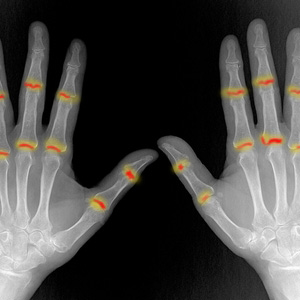
Winning Your Case Qualifying for Social Security & SSI disability benefits with a hand impairment means you abide by both Social Security's Non-Medical Criteria and Disability Criteria. Abiding by the disability criteria means - You learn how Social Security evaluates hand or finger conditions which is addressed on this page, You satisfy a Social Security Listing or you have disabling Functional Limitations which is addressed on the next page, and You Submit Winning Evidence whcih is addressed on the final page. What Social Security Needs To See In A Hand Or Finger Case Social Security realizes that a hand or finger condition can be disabling. Hand and finger conditions and symptoms can be the result of many different kinds of circumstances - traumatic incidents, or a host of non-traumatic medical conditions. You will need to supply Social Security with your medical records and other evidence establishing your medical case and your disability. Your evidence must…Read More

Benefits Depends On Meeting Two Criteria Social Security will pay you disability and SSI benefits with a severe bone fracture or break. You must satsify Social Security's Non-Medical Criteria and the Disability Criteria. You can satisfy the disability criteria if 1) you are familiar with Social Security's view of your medical evidence (diagnosis, symptoms, and treatment); 2) you satisfy a Social Security Fracture Listing you have disabling Functional Limitations, and 3) you Submit Winning Evidence. We discuss each of these issues on three separate pages. Let's get started on discussing how Social Security evaluates fracture medical evidence. Social Security Will Review Your Medical Evidence Important Issues. Broken bones and fractures are common, and Social Security sees a lot these types of cases. You need certain medical evidence to prove disability. You also need to be aware of three particular issues relevant to a Social Security disability and SSI fracture case. First, your fracture will need…Read More
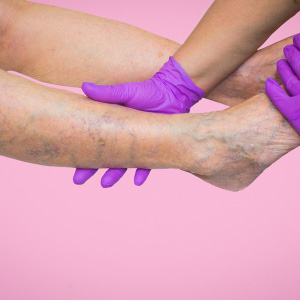
Winning Your Venous Insufficiency Case To be successful in a venous insufficiency Social Security disability and SSI benefits case, you must satisfy two criteria. First, satisfy the Non-Medical Criteria. Second, you satisfy the Disability Criteria. Satisfying the disability criteria necessitates - You know how Social Security evaluates venous insufficiency (discussed on this page) You satisfy a venous insufficiency Social Security Listing (also discussed on this page) or you have disabling Functional Limitations, and You Submit Winning Evidence. What Social Security Is Looking for - Venous Insufficiency And Medical Proof Venous insufficiency, if severe enough, can produce disabling symptoms and limitations and can therefore be the basis of a successful Social Security and SSI disability case. Venous insufficiency is an impairment that affects the legs where blood is unable to travel to or through the legs properly due to damaged valves or blood clots in the veins of the legs. Social Security will be more likely…Read More
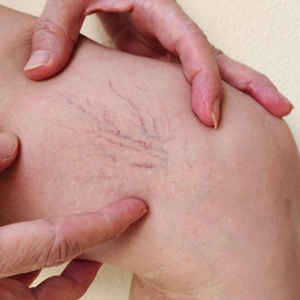
Winning A Vasculitis Case In your vasculitis claim, Social Security has two requirements you must meet to qualify for SSDI and SSI disability benefits. First, you meet the Non-Medical Criteria. Second, you meet the Disability Criteria. Satisfying the disability criteria means - You understand how Social Security evaluates vasculitis (discussed on this page), You satisfy a vasculitis Social Security Listing (also discussed on this page) or you have disabling Functional Limitations, and You Submit Winning Evidence. Social Security's Analysis Of Your Vasculitis Medical File Vasculitis is somewhat rare, and Social Security disability and SSI filings for vasculitis are therefore somewhat uncommon when compared to other medical conditions. Vasculitis is generally regarded to be an autoimmune disease wherein the body attacks the blood vessels which become inflamed and restrict blood flow. It can occur in nearly any part of the body. The cause is unknown. Symptoms vary widely depending on the body organ affected but usually…Read More
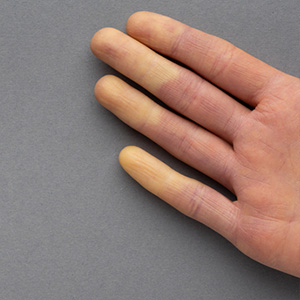
Winning Your Raynaud's Disease Case Winning your Social Security disability or SSI case with Raynaud's disease (phenomenon or syndrome) means complying with Non-Medical Criteria, and Disability Criteria. You can comply with the disability criteria if - You understand how Social Security evaluates Raynaud's syndrome (covered here) You satisfy a Raynaud's Social Security Listing (also covered here) or you have disabling Functional Limitations, and You Submit Winning Evidence. The Importance Of Medical Evidence In Your Disability Claim - Raynaud's Disease Raynaud's disease (also called Raynaud's phenomenon or syndrome) is a somewhat infrequent Social Security and SSI disability case when compared to other impairments. Raynaud's disease is a vascular disease that causes blood vessels in the fingers and toes to narrow and temporarily reduce blood flow. There are two types of Raynaud's: 1) primary Raynaud's which is its own condition, and 2) secondary Raynaud's which occurs because of another condition. Raynaud's commonly causes pain, numbness, coldness, and…Read More

Winning Your PAD Case You or your child can receive Social Security disability and SSI benefits with peripheral artery disease if Non-Medical Criteria and Disability Criteria are satisfied. Satisfying Social Security's disability criteria require - You comprehend how Social Security assesses peripheral artery disease (discussed here), You satisfy the Social Security PAD listing (also discussed here) or you have disabling Functional Limitations, and You Submit Winning Evidence. What Social Security Wants To See With Peripheral Artery Disease Social Security will award you benefits if your peripheral artery disease symptoms disable you. Peripheral artery disease, also known as PAD, is a condition in which atherosclerosis (cholesterol or plaque) blocks or reduces blood flow in the arteries that carry blood to the legs and arms and sometimes the stomach and head. Peripheral artery disease most commonly affects the legs. Social Security's examination of your medical file begins with the diagnosis of your peripheral artery disease which is…Read More
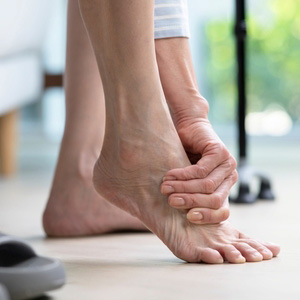
Winning Your Case If you fulfill the requirements of Social Security's Non-Medical Criteria and Disability Criteria, Social Security will find in your favor and award benefits. In satisfying the disability criteria, it is essential - You know how Social Security reviews your foot or feet impairment which we discuss on this page, You satisfy a listing or you have disabling Functional Limitations which we discuss on the next page, and You Submit Winning Evidence which we discuss on the last page. How Your Foot Or Feet Case Is Won - Medical Disability cases based on a foot or both feet are commonly heard by Social Security. There are a variety of injuries and medical causes that produce a foot or feet impairment and symptoms. Whatever the cause is, you can be awarded Social Security disability benefits if you furnish the correct evidence which includes your medical records and supplemental evidence proving your case. Your evidence…Read More

How A Back or Neck Surgery Affects A Disability Case Social Security recognizes that your need for a back or neck surgery constitutes a serious medical condition and that a back or neck surgery is a serious medical procedure. In a Social Security disability case, there are three possibilities when a back or neck surgery has been recommended or performed. First, a surgery is recommended but not performed. Second, a surgery is performed, and it is successful. Third, a surgery is performed, and it is unsuccessfull - a failed surgery. Social Security responds differently in each situation. Surgery Recommended But Not Performed If a doctor recommends a surgery, Social Security will regard your back or neck impairment as more severe than if no surgery is recommended. This is true even if the surgery is not performed. However, a surgery is generally expected to improve or cure your impairment. A surgery may improve your condition so…Read More
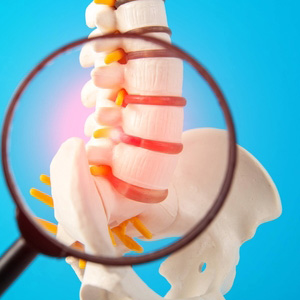
Winning Your Case You or your child can win a facet joint arthritis Social Security disability and SSI case if you fulfill the requirements of the - Non-Medical Criteria, and Disability Criteria. Fulfilling the requirement means - You know how Social Security assesses facet joint arthritis (covered here) You satisfy the Social Security Listing for facet joint arthritis (also covered here) or you have disabling Functional Limitations (covered on the next page), and You Submit Winning Evidence (covered on the last page). Social Security's Evaluaton Of Medical Evaluation - Facet Joint Arthritis General. Facet joint arthritis is osteoarthritis of the cervical, thoracic, and lumbar spinal facet joints. The facet joints are located on the backside of each of your spinal vertebrae. When you suffer facet joint arthritis, the cartilage between the facet joints wears away or shrinks causing the facet joints to rub against the other facet joints above or below them. In severe cases,…Read More

Winning Your Case You or your child can win an epilepsy or seizure Social Security disability and SSI case if two criteria are satisfied: Non-Medical Criteria, and Disability Criteria. Satisfying the disability criteria means - You know how Social Security looks at an epilepsy and seizure case (talked about on this page), You satisfy the Social Security Epilepsy Listing (also talked about on this page) or you have disabling Functional Limitations (talked about on the next page), and You Submit Winning Evidence (talked about on the last page). Overview Seizure Types. Social Security adjudicates many epilepsy and seizure disability and SSI cases. Epilepsy is a neurological disorder that affects the brain and causes seizures, temporary abnormal behavior, and sensations. There are two types of neurological seizures: general (affects the whole brain) and partial or focal (affects part of the brain). There are six types of generalized seizures: absence ("petit mal seizures" with short loss of…Read More