
Winning Your Case Social Security will conclude you are disabled and award SSDI or SSI benefits with Human Immunodeficiency Virus (HIV) or Acquired Immunodeficiency Syndrome (AIDS) if you observe two rules: Non-Medical Criteria, and Disability Criteria. Successfully observing the disability criteria means - You learn how Social Security assesses HIV or AIDS (covered on this page), You satisfy the HIV/AIDS Social Security Listing (also covered on this page) or you have disabling Functional Limitations (covered on the next page), and You Submit Winning Evidence (covered on the last page). When your HIV or AIDS renders you unable to maintain full-time employment, Social Security will determine that you are disabled. HIV is a virus that destroys CD4 cells or T-helper cells which weakens the immune system and makes it difficult for the body to fight infections. The virus stays in your body forever. HIV is diagnosed by blood testing (ELISA testing, viral load testing, or western…Read More
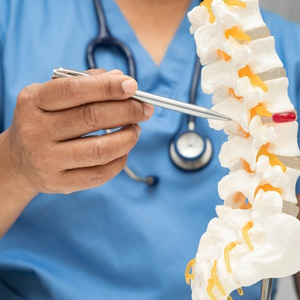
Winning Your Case With a herniated disc (ruptured, bulging, or slipped), you can get disability and SSI benefits from Social Security if you abide by two criteria: Non-Medical Criteria, and Disability Criteria. On this page, we explore how Social Security analyses your herniated disc medical evidence. On the next page, we explore how Social Security analyses your Functional Limitations caused by your herniated disc to conclude whether you are disabled. Then on the last page, we explore what Evidence to submit to prove your medical case, your limitations, and other details of your Social Security disability claim. Social Security, Medical Evidence, And A Herniated Disc Social Security intakes lumbar, thoracic, and cervical herniated disc disability cases every day. A spinal disc is a cartilage-type material that sits between the spinal vertebrae that acts as a cushion. When a disc herniates, it moves out of place. A herniated disc is most commonly caused by a traumatic…Read More

Winning Your Case If you want to win your liver disease or cirrhosis Social Security and SSI disability case, you must follow two criteria: Non-Medical Criteria, and Disability Criteria. Successfully following the disability criteria requires two things: You know how Social Security reviews a liver disease and cirrhosis case (this page); You satisfy a liver disease Social Security Listing (also this page) or you have disabling Functional Limitations (next page), and You Submit Winning Evidence (last page). What Does Social Security Look For With Liver Disease Liver disease is a complex Social Security & SSI disability case. Liver disease (also called liver cirrhosis) is scarring of the liver. It is due to many causes including high cholesterol, high blood pressure, alcohol use, hepatitis, a virus, an autoimmune disorder, drug/medicine use, and a wide variety of toxins. The more liver tissue that turns to scar tissue, the more abnormally the liver functions. Liver disease is diagnosed…Read More
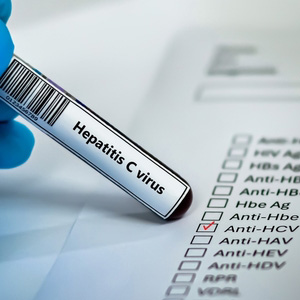
Winning Your Case You must comply with two fundamental rules to obtain Social Security disability and SSI benefits with hepatitis: The Non-Medical Criteria, and The Disability Criteria. Complying with the disability criteria requires - You understand how Social Security analyzes hepatitis (this page), You satisfy a Social Security Listing related to hepatitis (also this page) or you have disabling Functional Limitations (next page), and You Submit Winning Evidence (last page). Medical Evidence In A Hepatitis Social Security & SSI Disability Case Social Security commonly decides hepatitis disability cases. Hepatitis is a viral infection. It spreads through infected blood. Hepatitis itself rarely causes severe symptoms. In fact, many people with hepatitis have asymptomatic hepatitis for years. However, hepatitis can eventually damage the liver, and when that happens, symptoms result. There are several hepatitis types: Hepatitis A, Hepatitis B, Hepatitis C, Hepatitis D, Hepatitis E, Alcoholic hepatitis, and Autoimmune hepatitis. In a Social Security disability case, evidence…Read More

Winning Your Case Winning your mental retardation or intellectual disorder Social Security disability and SSI case means fulfilling the - Non-Medical Criteria, and Disability Criteria. Fulfilling the disability criteria means - You read about Social Security's mental retardation & intellectual disorders evaluation (discussed on this page), You satisfy a Social Security Listing (also discussed on this page) or you have disabling Functional Limitations (discussed on the next page), and You Submit Winning Evidence (discussed on the last page). Mental Retardation & Intellectual Disorders - Social Security's View Of Your Medical Evidence Two Ways To Be Found Disabled Mental retardation or intellectual disorders can be caused by a wide variety of medical conditions (e.g. congenital or genetic causes, Alzheimer's, dementia, stroke, traumatic brain injury, viruses, or infections). Regardless of the cause, Social Security can find you disabled in basically one of two ways. Listing. First, you are a child or an adult and you meet mental…Read More

Winning Your Stroke Case Your stroke Social Security disability and SSI benefits case will be granted if the following two criteria are satisfied: Non-Medical Criteria, and Disability Criteria. Regarding the disability criteria, it is best that - you understand how Social Security evaluates a stroke (discussed on this page), You satisfy a stroke Social Security Listing (also discussed on this page) or you have disabling Functional Limitations, and You Submit Winning Evidence. Social Security Is Looking For Specific Stroke Medical Records Millions of Americans have suffered a stroke or a cerebral vascular accident (CVA), and Social Security deals with a huge number of stroke and CVA disability and SSI claims. A stroke is a deprivation of blood and oxygen to the brain. There are two types of strokes: 1) an ischemic stroke caused by a blocked blood vessel carrying blood to the brain, and 2) a hemorrhagic stroke caused by a brain blood vessel leak…Read More

Winning Your Case Social Security will award disability and SSI benefits with heart disease or a heart attack if two rules are satisfied: The Non-Medical Criteria, and The Disability Criteria. On this page, we examine how Social Security interpretes your heart disease/attack medical evidence. On the next page, we review how Social Security interprets your heart-related Functional Limitations when it decides whether you are disabled. Then on the last page, we examine how to Submit Winning Evidence to prove your heart condition, your limitations, and additional necessary details of your disability case. Heart Disease Evidence In A Social Security & SSI Disability Case Heart disease is one of the most frequently filed types of Social Security and SSI disability cases. It is also one of the most significant medical conditions in America. Heart disease causes about 650,000 deaths in America per year - more than any other medical condition. Heart condition causes more deaths in…Read More
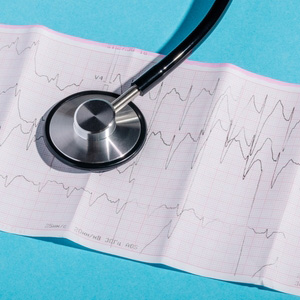
Winning Your Case An award of SSDI or SSI disability benefits from Social Security with a heart arrhythmia is possible. First, your case facts must match the Non-Medical Criteria. Second, your case facts and your heart arrhythmia condition must match the Disability Criteria. Matching the disability criteria means - Knowing how Social Security evaluates your heart arrhythmia condition (examined on this page), You satisfy a Social Security Heart Arrhythmia listing (also examined on this page) or you have disabling Functional Limitations (examined on the next page), and You Submit Winning Evidence (examined on the last page). How Social Security Looks At Heart Arrhythmia A heart arrhythmia is a recurrent Social Security disability & SSI case. An arrhythmia is an abnormal heartbeat that is fast (tachycardia), slow (bradycardia), skips, or otherwise irregular. There are two main types of arrhythmias - 1) atrial or superventricular, or 2) ventricular. Atrial arrhythmias occur in the upper heart chambers. Ventricular…Read More

Basic Rules Your Case To obtain Social Security disability and SSI benefits with hearing loss, deafness, and labyrinthine-vestibular disorders means meeting two criteria: 1) Non-Medical Criteria and 2) Disability Criteria. Following the requirements of the disability criteria means - You know how Social Security reviews hearing loss, deafness, and labyrinthine-vestibular disorders (examined on this page), You satisfy a Hearing Loss Social Security Listing (also examined on this page) or you have disabling Functional Limitations (examined on the next page), and You Submit Winning Evidence (examined on the last page). Necessary Medical Evidence You Need to Win Your Social Security Disability Case You will need to submit to Social Security evidence of your hearing loss which includes testing and treatment. Social Security will want to see two types of testing: 1) an otologic examination (in-office clinical exam generally done by an ENT) and 2) audiometric testing (hearing testing done with headphones and a soundproof booth by…Read More
Winning Your Case You or your child can win a Sjogren's syndrome Social Security disability and SSI benefits case if you meet Social Security's - Non-Medical Criteria, and Disability Criteria. With the disability criteria, You need to understand how Social Security evaluates Sjogren's syndrome (covered on this page) You satisfy a Social Security Sjogren's Listing (also covered on this page) or you have disabling Functional Limitations, and You Submit Winning Evidence. What is Social Security Looking For With Sjogren's Syndrome - Medical Evidence Social Security knows that Sjogren's syndrome is an autoimmune system disorder (the body attacks itself). The most common symptoms are dry eyes and dry mouth. Social Security will not find these symptoms disabling. In severe cases of Sjogren's, symptoms include peripheral neuropathy (usually in the hands and feet); fatigue; illness; and kidney, liver, and lung inflammation. This level of severity and these symptoms are less common, and Social Security can find these…Read More