
Winning Your Case Social Security will adjudicate your schizophrenia Social Security disability and SSI case and rule in your favor if you satisfy - Non-Medical Criteria, and Disability Criteria. In terms of the disability criteria, you should understand the following: How Social Security evaluates schizophrenia (reviewed below), You satisfy the Schizoaffective Disorder Social Security Listing (also reviewed below) or you have disabling Functional Limitations, and You should Submit Winning Evidence. Social Security's Reading Of Your Schizophrenia Medical Evidence Is Critical Diagnosis. Schizophrenia is a severe mental health disorder, and if diagnosed properly, it is usually awarded by Social Security without a hearing. The Diagnostic and Statistical Manual of Mental Disorders, Fifth Edition (DSM-5) establishes five diagnostic criteria (you must meet all five): Two or more of - delusions, hallucinations, disorganized speech, grossly disorganized or catatonic behavior, or negative symptoms such as diminished emotional expression; Reduced level of functioning; Symptoms have lasted six months or more;…Read More
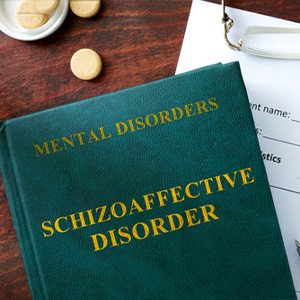
Winning Benefits With a schizoaffective disorder, if the rules of Social Security's Non-Medical Criteria and Disability Criteria are met, you will receive Social Security disability and SSI benefits. Fulfilling the disability criteria means - You read how Social Security reviews your mental health disorder (discussed below), You satisfy a Social Security Listing for schizoaffective disorder (also discussed below) or you have disabling Functional Limitations, and You Submit Winning Evidence. Medical Evidence In A Social Security Disability & SSI Case Schizoaffective disorder is an uncommon Social Security disability and SSI case compared to other types of disability cases. Less than one percent of the population is diagnosed with schizoaffective disorder. Schizoaffective disorder is a severe mental health disorder in which a person suffers psychotic symptoms and a mood disorder (manic or depressive). There are two types of schizoaffective disorder, 1) bipolar type (the disorder includes mania and depressive episodes), and 2) depressive type (the disorder includes…Read More

Winning Your Case Obtaining Social Security disability and SSI benefits with pulmonary hypertension from Social Security is relatively straightforward. First, you must comply with Social Security's Non-Medical Criteria which means obtaining work credits for SSDI or having (mainly) low income and resources for SSI. Second, you must satisfy Social Security's Disability Criteria which is the 5-Step disability process for adults and the 3-Step disability process for kids. Satisfying the disability criteria means - You understand how Social Security evaluates pulmonary hypertension (reviewed on this page) You satisfy a Social Security Listing related to pulmonary hypertension (also reviewed on this page) or you have disabling Functional Limitations, and You Submit Winning Evidence. Disability, Pulmonary Hypertension Medical Records, And Social Security Social Security will be looking very closely at your pulmonary hypertension which is high blood pressure in the pulmonary arteries that flow from the right side of the heart to the lungs caused by a narrowing…Read More
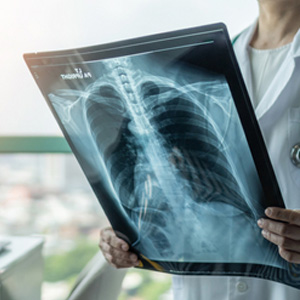
Winning Your Case With pulmonary fibrosis or pneumoconiosis, Social Security will render a favorable ruling for either you or your child if you meet the following two regulations: Non-Medical Criteria, and Disability Criteria. Regarding the disability criteria, you should understand - How Social Security evaluates pulmonary fibrosis (reviewed on this page), You satisfy Social Security Listing related to pulmonary fibrosis (also reviewed on this page) or you have disabling Functional Limitations, and You Submit Winning Evidence. When Social Security Examines Your Pulmonary Fibrosis Medical Evidence You can be victorious in a Social Security and SSI disability case with pulmonary fibrosis or pneumoconiosis which is a severe lung disease where the air sacs (alveoli) of the lungs become irreversibly scarred. The most common causes include exposure to toxins, other medication conditions, or radiation therapy. Common symptoms of pulmonary fibrosis include the following: Breathing dysfunction, Fatigue, Chest pain, Dizziness, Coughing, Illness, and Weight loss. Whether you are…Read More
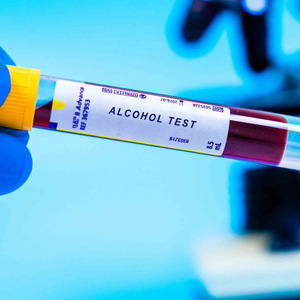
Overview In any Social Security disability case, there are two primary issues with drug and alcohol use. First, whether drugs and alcohol cause you to be disabled. Second, how drug and alcohol use affects your credibility. There are three secondary issues - testing, whether Social Security reports your use to the authorities, and payees. Tip. Before we get started with all that, Social Security is not concerned with one-time or two-time drug use and social or casual drinking. Social Security is concerned with ongoing drug use and alcohol abuse. Disability & Social Security's Drug And Alcohol Evaluation Six-Step Evaluation If drugs and alcohol cause you to be disabled, Social Security will find your use "material" or "material to your disability," and you will not receive disability benefits. Social Security uses a six-step drug and alcohol evaluation process to determine if your use is material. Tip. Social Security rarely finds drug and alcohol use material. Step…Read More

Winning Your PTSD Disability Case You can prove you are disabled with post-traumatic stress disorder (PTSD). You need to satisfy the following to obtain a favorable Social Security disability and SSI decision: Non-Medical Criteria, and Disability Criteria. With the disability criteria, it is necessary - You understand how Social Security evaluates PTSD (covered below), You satisfy the PTSD Social Security Listing (also covered below) or you have disabling Functional Limitations, and You Submit Winning Evidence. How Social Security Assesses Your PTSD Medical File PTSD is one of the most common mental health conditions in America. It is therefore a very common disability case adjudicated by Social Security. PTSD is a psychiatric disorder that results from the experience of a traumatic event. PTSD is most common with veterans and victims of physical, emotional, or sexual trauma. Social Security will need evidence showing a diagnosis by a mental health specialist (not a primary doctor), and regular mental…Read More

Winning Your Case You can be successful in a polymyositis Social Security disability and SSI benefits case by meeting Social Security's - 1) Non-Medical Criteria and Disability Criteria. Meeting the disability criteria necessitates means you understand how Social Security evaluates polymyositis (discussed on this page), you satisfy a Social Security Listing (also discussed on this page) or you have disabling Functional Limitations, and you Submit Winning Evidence. Social Security, And Your Polymyositis Medical File Polymyositis is a disability case Social Security rarely evaluates compared to other conditions. Polymyositis is an uncommon autoimmune disease that attacks its own muscles and related tissues. It usually affects upper body muscles and can affect the internal organs, but it can also affect the lower body muscles. Symptoms include the following: Muscle weakness, Muscle loss, Pain, Stiffness, Shortness of breath, Fatigue, and Weight loss. Social Security's assessment of the severity of your polymyositis is based on your diagnostic testing, your…Read More

Winning a Social Security Disability Case To become entitled to Social Security and SSI disability benefits based upon a personality disorder, you must fulfill Social Security's non-medical and disability criteria. Meeting the disability criteria means understanding how Social Security evaluates your medical evidence. Medical Evidence Is Critical In A Personality Disorder Case A personality disorder is a psychiatric disorder and a fairly rare basis for a Social Security disability case. It is estimated that about 8-10% of people are affected by a personality disorder. The Diagnostic and Statistical Manual of Mental Disorders, Fifth Edition (DSM-5), classifies personality disorders in one of three clusters and also as one of ten types with each type having its own specific traits. The clusters and types are as follows: Cluster A (odd, eccentric) - Paranoid, Schizoid, and Schizotypal. Cluster B (dramatic, erratic) - Antisocial, Borderline, Histrionic, and Narcissistic. Cluster C (anxious, fearful) - Avoidant, Dependent, and Obsessive-compulsive. It is…Read More

Winning Your Parkinson's Case You or your child can win a Parkinson's Social Security disability or SSI benefits case if two requirements are fulfilled: Non-Medical Criteria, and Disability Criteria. Fulfilling the disability criteria means - You understand how Social Security evaluates Parkinson's disease (discussed on this page), You satisfy the Social Security Parkinson's Syndrome Listing (also discussed on this page) or you have disabling Functional Limitations, and You Submit Winning Evidence. Parkinson's - Your Medical Evidence And Social Security's Reasoning Parkinson's disease is a serious medical condition, but one that is infrequently adjudication by Social Security compared to other types of medical conditions. Parkinson's disease is a nervous system disorder caused by the degeneration or death of brain neurons (nerve cells) which causes a lack of dopamine in the body. The primary symptoms are - Tremors, Muscle jerks, Stiffness, Weakness, Fatigue, Cognitive impairments. Social Security always wants evidence of your Parkinson's. It evaluates your medical…Read More

Winning A Case with Obesity With obesity, Social Security will determine whether you satisfy the Non-Medical Criteria, and Disability Criteria. If you do, you are disabled. To satisfy the disability criteria, it is essential you understand your obesity condition, you have disabling Functional Limitations, and you Submit Winning Evidence. What Social Security Thinks About Your Obesity Social Security considers obesity to be a medical impairment that worsens other medical conditions. Obesity places additional stress on the body causing the body to work harder and function less efficiently. In Social Security disability cases, it is recognized that obesity most commonly worsens musculoskeletal (joints of the body), respiratory (breathing), and cardiovascular (heart and veins) medical conditions. It is extremely rare for Social Security to find an adult or child disabled based on obesity alone. For those with obesity, a disability finding is nearly always based on a combination of obesity and another medical condition. Obesity is the…Read More