
Winning A Scoliosis Case With your scoliosis case, Social Security can award you disability or SSI benefits if you satisfy - 1) Non-Medical Criteria and 2) Disability Criteria. In terms of the disability criteria, you should understand how Social Security evaluates scoliosis (covered on this page) and Submit Winning Evidence. What Is Social Security Looking for - Scoliosis And Medical Proof Social Security will take your scoliosis disability case seriously. Scoliosis is an abnormal curve (a C-shaped or S-shaped curve) of the spine. There are five kinds of scoliosis: Congenital (spine deformed at birth), Early-onset (appears before age 10), Adolescent idiopathic scoliosis (occurs in adolescents after age 10), Degenerative (scoliosis in adults caused by degenerative disk disease and/or prior scoliosis), and Neuromuscular scoliosis (abnormalities of the muscles or nervous system). While reviewing your medical, Social Security will be more likely to find you disabled if you suffer the following typical scoliosis symptoms: Pain, Numbness, Stiffness,…Read More
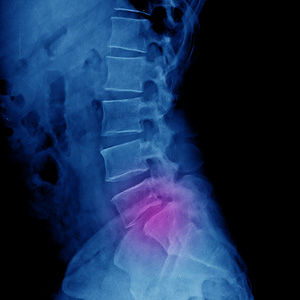
Winning Your Spondylolisthesis Case With a spondylolisthesis Social Security disability and SSI benefits claim, you need to satisfy two Social Security criteria. First, you satisfy the Non-Medical Criteria; and Second, you satisfy the Disability Criteria. Satisfying the disability criteria means - You understand how Social Security evaluates spondylolisthesis (covered below), You satisfy a spondylolisthesis Social Security Listing (also covered below) or you have disabling Functional Limitations, and You Submit Winning Evidence. Spondylolisthesis & Medical Documentation Social Security is no stranger to spondylolisthesis disability cases. Spondylolisthesis is the degeneration of spinal discs (vertebrae) where one disc slips forward on top of the other. The slippage can cause the disc to rub against a nerve causing radiculopathy or neuropathy or rub against the spinal cord causing myelopathy. Sometimes the nerve or spinal cord is affected only where it is rubbed by the disc, and sometimes the nerve or cord affects the extremities. Spondylolisthesis symptoms are typically Pain,…Read More
Winning Your Spinal Stenosis Case You or your child can win a spinal stenosis Social Security disability and SSI benefits case if two criteria are satisfied: Non-Medical Criteria, and Disability Criteria. Regarding the disability criteria, it is best - You understand how Social Security evaluates spinal stenosis (covered on this page), You satisfy a spinal stenosis Social Security Listing (also covered on this page) or you have disabling Functional Limitations, and You Submit Winning Evidence. Your Spinal Stenosis Medical And How Social Security Reviews It Social Security regularly makes disability decisions regarding spinal stenosis which is a narrowing of the spinal canal that causes pressure on the spinal cord and nerve roots. Spinal stenosis is most common in the lumbar and cervical spine - less so in the thoracic spine. It is most commonly caused by a variety of impairments - Bulging, herniated, ruptured, or slipped disc; Degenerative disk disease (arthritis of the spinal vertebrae);…Read More

Winning A Neck/Cervical Disability Case You or your child can win your neck or cervical spine case if you satisfy just two, but two very important, Social Security requirements: Non-Medical Criteria, and Disability Criteria. Satisfying the disability criteria means - You know how Social Security evaluates a neck/cervical impairment (discussed on this page), You satisfy a Social Security Listing (also discussed on this page) or you have disabling Functional Limitations, and You Submit Winning Evidence. Neck & Cervical Conditions General A large volume of Social Security and SSI disability cases are determined involving neck or cervical conditions. Social Security will evaluate your neck condition generally, but it primarily evaluates your neck condition according to your specific medical diagnosis which commonly includes the following: Degenerative disc disease; Herniated, bulging, or ruptured cervical discs; Cervical spinal stenosis; Cervical arachnoiditis; Cervical ankylosing spondylitis; Cervical spondylolisthesis; Cervical scoliosis; or Cervical spine fractures. Neck/Cervical Neuropathy, Radiculopathy, & Myelopathy Many of…Read More

Winning Your Case For you or your child to become entitled to Social Security and SSI benefits based upon a muscular dystrophy disability, you must fulfill Social Security's Non-Medical Criteria and Disability Criteria. Fulfilling the disability criteria means, you or your child must 1) learn how Social Security views your muscular dystrophy case (discussed below), 2) you learn how to establish you or your child fulfill the Social Security Muscular Dystrophy Listing requirements (also discussed below) or you learn how to establish you or your child have disabling functional limitations (discussed on the next page). In all cases, it is necessary to Submit Winning Evidence to prove your claim (discussed on the last page). The Significance Of Medical Evidence In A Muscular Dystrophy Disability Case A muscular dystrophy case, with a proper diagnosis, is usually awarded at the initial Social Security disability level. Muscular dystrophy is a muscle disease that is caused when you have…Read More

Winning Your MS Case Two criteria must be met for Social Security to conclude you are eligible for multiple sclerosis SSDI or SSI disability benefits: Non-Medical Criteria, and Disability Criteria. Meeting the disability criteria necessitates - You are aware of Social Security's multiple sclerosis evaluation (discussed on this page); and You satisfy the Social Security Multiple Sclerosis Listing (also discussed on this page) or you have disabling Functional Limitations (discussed on the next page); and You Submit Winning Evidence (discussed on the next, next page). Medical Evidence, Multiple Sclerosis, And Disability Multiple sclerosis is both a demyelinating disease and an autoimmune disease where the body attacks its own nervous system by destroying the myelin sheath that surrounds and protects the nerves. The cause is unknown. There is no cure. Social Security recognizes that multiple sclerosis can be a very significant medical condition that can result in a finding of disability. Properly documented cases are usually…Read More

Winning Your Leukemia Case To secure Social Security and SSI disability benefits with leukemia, you must conform to two very basic regulations: Non-Medical Criteria (work credits for SSDI and mainly income and resources thresholds for SSI), and Disability Criteria (5-step process for adults and 3-Step process for children). Conforming to the disability criteria means - You comprehend how Social Security looks at leukemia (addressed on this page), You satisfy a Social Security Leukemia Listing (also addressed on this page) or you have disabling Functional Limitations (addressed on the next page), and You Submit Winning Evidence (addressed on the next page). What Medical You Should Provide To Social Security - Leukemia Leukemia is a very severe Social Security and SSI disability case that, if documented correctly, is normally awarded by Social Security at the initial (first decision) or reconsideration (second decision) levels. Leukemia is cancer of the blood, bone marrow, or the lymphatic system. There are…Read More

Winning Your Knee Disability Case Suffer from significant knee symptoms? If so, you can be found disabled for Social Security disability and SSI benefits. You must show you comply with two Social Security criteria: Non-Medical Criteria, and Disability Criteria. Satisfying the Social Security criteria requires - You have a grasp of how Social Security looks at a knee condition (discussed on this page), You satisfy a knee-related Social Security Listing (also discussed on this page) or you have disabling Functional Limitations (discussed on next page), and and you Submit Winning Evidence (discussed on the last page). Your Knee And Social Security's Review Of Your Medical Records Social Security will thoroughly evaluate your case to determine whether your knee condition is severe enough to warrant a finding of disability. Your knee condition may be the result of a variety of injuries or medical conditions. You will be asked to submit to Social Security your medical records…Read More

Winning Your Case Social Security considers you disabled for SSDI and SSI disability benefits with kidney disease when you prove two things: Non-Medical Criteria, and Disability Criteria. Proving the disability criteria means - You know how Social Security reviews a kidney disease case (discussed on this page); You satisfy a kidney disease Social Security Listing (also discussed on this page) or you have disabling Functional Limitations (discussed on the next page); and You Submit Winning Evidence (discussed on the next, next page). Social Security's Rationale - Kidney Disease And Your Medical Evidence Kidney disease, or kidney failure, can cause serious symptoms and disability, and it is the ninth leading cause of death in America. It is a frequent basis of a Social Security disability & SSI application. Your kidneys filter your blood, and kidney disease means the loss of kidney function. In nearly all cases, kidney disease is irreversible. It is essential to Social Security…Read More

Winning Your Case You or your child can win a Huntington's disease Social Security and SSI disability case if two criteria are successfully satisfied: Non-Medical Criteria, and Disability Criteria. Successfully following the disability criteria means - You appreciate how Social Security appraises Huntington's disease (discussed below), You satisfy a Huntington's disease Social Security Listing (also discussed below) or you have disabling Functional Limitations (discussed on the next page), and You Submit Winning Evidence (discussed on the last page). With Social Security, Your Huntington's Disease Medical Evidence Is Priority Social Security regards Huntington's disease as a very serious medical condition. Huntington's disease is the degeneration of nerve cells in the brain. Symptoms include uncontrolled movements, cognitive impairment, and mood changes. Life expectancy after onset is about 20 years. When Social Security reads your medical records to determine if you are disabled, it is first reviewing those records for a diagnosis that is done by brain CT…Read More