
Winning A Skin Condition Case Social Security disability and SSI benefits will be paid based on a skin condition if you meet two Social Security rules: Non-Medical Criteria, and Disability Criteria. With the disability criteria, it is important - You understand how Social Security evaluates skin conditions (covered below) You satisfy a Social Security skin condition Listing (also covered below) or you have disabling Functional Limitations, and You Submit Winning Evidence. Skin Conditions - What Medical Evidence Does Social Security Want? Common Skin Conditions. In a Social Security and SSI disability case, the following skin conditions typically cause the most significant symptoms, the most serious functional limitations, and disability: Ichtyosis; Bullous disease (pemphigus, erythema multiforme bullosum, epidermolysis bullosa, bullous pemphigoid, dermatitis herpetiformis); Cellulitis; Impetigo; Dermatitis (psoriasis, dyshidrosis, atopic dermatitis; exfoliative dermatitis; Allergic contact dermatitis); Hidradenitis suppurativa; and Genetic photosensitivity disorders. Necessary Medical Information. You will need to notify Social Security about your medical treatment: Diagnosis;…Read More
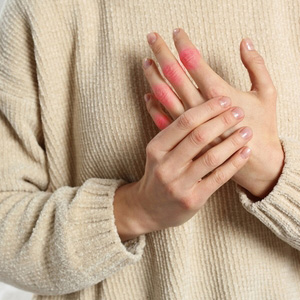
Winning Your Rheumatoid Arthritis Case You can be awarded Social Security disability and SSI benefits with rheumatoid arthritis (RA) if you satisfy the following - Non-Medical Criteria, and Disability Criteria. Satisfying the disability criteria means - You understand how Social Security evaluates rheumatoid arthritis (RA) (reviewed below), You satisfy a RA Social Security Listing (also reviewed below) or you have disabling Functional Limitations, and You Submit Winning Evidence. Social Security's Analysis Of Your Rheumatoid Arthritis Medical File Social Security frequently hears rheumatoid arthritis cases. Rheumatoid arthritis is an immune system impairment where the immune system attacks the synovial lining of your joints. The disease process begins with the presence of abnormal levels of anti-CCP antibodies and rheumatoid factor antibodies (RF) in the blood. These abnormal levels are often not detected when they first appear because the individual is not yet symptomatic. Then, inflammation of the synovial lining occurs (synovitis) which causes typical symptoms of joint…Read More
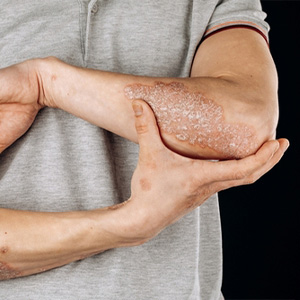
Winning Your Case Winning your Social Security disability and SSI benefits case with psoriatic arthritis requires you meet Social Security's - 1) the Non-Medical Criteria, and 2) the Disability Criteria. Satisfying the disability criteria requires you understand how Social Security looks at psoriatic arthritis (discussed on this page), you satisfy a Social Security Listing (also discussed on this page) or you have disabling Functional Limitations, and you Submit Winning Evidence. Your Psoriatic Arthritis Disability Case - Medical Evidence If your psoriatic arthritis keeps you from holding down full-time work, Social Security will adjudicate your disability case, and grant you benefits. Psoriatic arthritis is a type of rheumatologic disease/arthritis that sometimes occurs in patients who have psoriasis. Psoriatic arthritis is an autoimmune disease where the body's immune system attacks and destroys joint cartilage - any joint in the body can be affected. Cartilage is the padding in between your bones. When the cartilage is destroyed, your…Read More
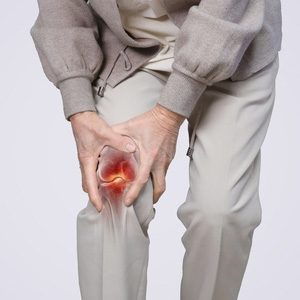
Winning Your Osteoarthritis & Degenerative Joint Disease Case You can get Social Security disability and SSI benefits with osteoarthritis and degenerative joint disease. Two criteria must be met: The Non-Medical Criteria, and The Disability Criteria. Meeting the disability criteria necessitates - You learn how Social Security scrutinizes osteoarthritis (covered here), You satisfy a Social Security Listing (also covered here) or you have disabling Functional Limitations, and You Submit Winning Evidence. How Social Security Reviews Osteoarthritis & Degenerative Joint Disease Osteoarthritis (also called degenerative joint disease) is an extremely common medical condition, and therefore, it is an extremely common Social Security disability claim. It is the deterioration of cartilage. It is often referred to as "wear and tear" arthritis. Between the bones (and spinal vertebrae) you have cartilage that acts as a fibrous cushion allowing your bones to move and function. When the cartilage deteriorates, the bones rub against one another causing joint swelling, stiffness, pain,…Read More

Winning Your Case Obtaining Social Security disability and SSI benefits with neuropathy, radiculopathy, and myelopathy means meeting two criteria: The Non-Medical Criteria, and The Disability Criteria. Meeting the disability criteria requires - You know about of your medical condition (talked about here) You satisfy a Social Security Listing (also talked about here) or you have disabling Functional Limitations, and You Submit Winning Evidence. Neuropathy vs. Radiculopathy vs. Myelopathy In A Disability Case General. Millions of neuropathy, radiculopathy, and myelopathy conditions are treated in America each year, and they are regularly evaluated in Social Security and SSI disability cases. Any of the three can cause symptoms in any part of the body, and any of the three can be caused by a variety of factors, most commonly, injury, infection, compression, and toxins. If you spend some time studying how the medical community defines neuropathy, radiculopathy, and myelopathy, and specifically, what the differences are, you will get…Read More
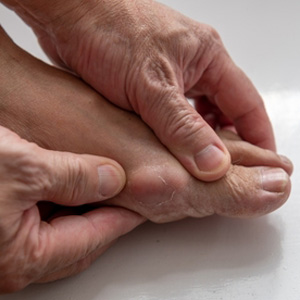
Winning Your Case You or your child can win a gout Social Security disability and SSI case and obtain benefits with adherence to two criteria. First, Non-Medical Criteria. Second, Disability Criteria. Adherence to the disability criteria means - You know how Social Security looks at gout (discussed on this page), You satisfy the Social Security gout Listing (also discussed on this page) or you have disabling Functional Limitations (discussed on the next page), and You Submit Winning Evidence (discussed on the last page). Social Security's Judgment About Your Gout Medical File Social Security will conduct a detailed evaluation of your gout disability case. Gout is a form of arthritis that develops when you have uric acid levels in your blood that form monosodium urate crystals in your joints. It is the crystals that cause the majority of gout symptoms, and Social Security is aware of the following regular symptoms: Pain, Joint swelling, Stiffness, Numbness, Joint…Read More

Winning Your Case You or your child can win a Social Security disability or SSI case with an elbow condition if you satisfy two critical criteria: Non-Medical Criteria, and Disability Criteria. Satisfying the disability criteria means - You learn how Social Security assesses elbow conditions (explained on this page), and You satisfy an elbow-related Social Security Listing (also explained here) or you have disabling Functional Limitations (explained on the next page), and You Submit Winning Evidence (explained on the last page). Elbow Pain & Disability Social Security can find that your elbow condition disables you. An elbow impairment can be caused by an injury or a long list of medical conditions and diseases. Whatever it is that caused your elbow condition, a finding of disability can only be made if you supply Social Security with medical records and additional evidence proving your case. You will need to provide evidence of 1) your diagnosis which needs…Read More

Winning Your Case You or your child can win a Down Syndrome Social Security disability and SSI case if you or your child meet two criteria: Non-Medical Criteria, and Disability Criteria. Meeting the disability criteria requires - You read how Social Security evaluates Down syndrome (reviewed on this page); You satisfy the Social Security Down Syndrome Listing (also reviewed on this page) or you have disabling Functional Limitations (reviewed on the next page); and You Submit Winning Evidence (reviewed on the next, next page). Overview Social Security considers Down syndrome very severe and disabling. Down syndrome is a genetic disorder caused by a third (partial or full) copy of chromosome 21. There are three types of Down syndrome: 1) Trisomy (94-95% occurrence), 2) Translocation (3-4% occurrence), and 3) Mosaic (1-2% occurrence). About 1 in 700 children are diagnosed with Down syndrome. In your Social Security disability and SSI case, the administration will require a diagnosis…Read More
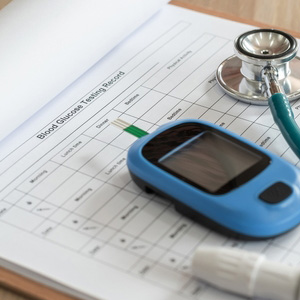
Winning Your Case You or your child can win a diabetes Social Security disability case if you satisfy two criteria: Non-Medical Criteria, and Disability Criteria. On this page, we review how Social Security examines your diabetes medical evidence. On the next page, we review how Social Security examines your diabetes-related Functional Limitations to determine if you are disabled. Then on the last page, we review how to Submit Winning Evidence to prove your condition, your limitations, and other aspects of your diabetes disability case. Diabetes - What Does Social Security Look For? There is probably no more common basis of a Social Security disability and SSI claim than diabetes. Diabetes is a disease that occurs when the body cannot make or use insulin properly. There are three types of diabetes: Type 1 (your body does not make insulin), Type 2 (your body does not make/use insulin properly), and gestational diabetes (occurs during pregnancy and usually…Read More

Two Types Of Working On this page, we review 1) whether you can work while your Social Security disability and SSI case is pending, and 2) whether you can work while you are getting disability benefits. Can I Work While My Social Security Disability Case Is Pending? Overview If your Social Security Disability Insurance (SSDI) or Supplemental Security Income (SSI) disability case is pending, and you return to work, Social Security will classify your return to work as either 1) unsuccessful or 2) successful. Social Security refers to unsuccessful return to work as an unsuccessful work attempt (UWA). An UWA and a successful return to work each affect your disability case differently. Unsuccessful Work Attempt Two Types Of UWAs. Social Security will rule your work attempt as an UWA in one of two circumstances. First, you 1) returned to work, and 2) you did not make substantial gainful activity (SGA) which is $1,260 per month…Read More